

2026 Market Intelligence for Canadian Beef Producers
The beef sector reflects on 2025, looks ahead to 2026
This article was developed in collaboration with Beef Illustrated and Alberta Beef Magazine and originally published in Beef Illustrated's January 2026 issue.
"This is exactly what the doctor ordered"
KATE AYERS
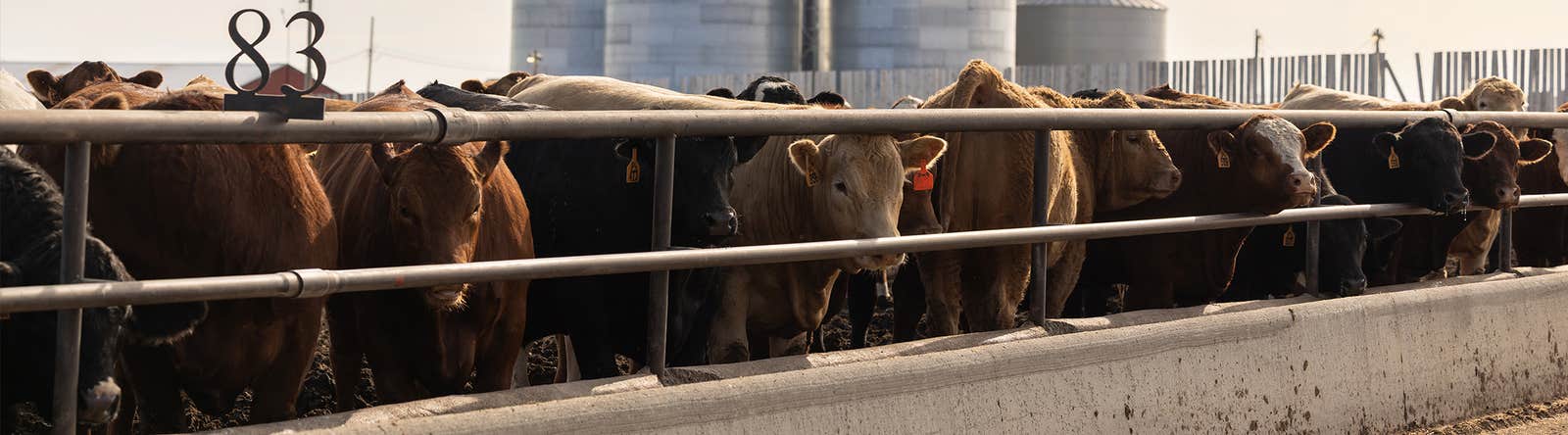
Following years of incredibly tight margins, calf and feeder prices that hit all-time record highs in 2025 were a boon for Canada’s beef sector. While producers and operators may feel some relief, uncertainty hangs in the air and experts urge the sector to take advantage of current market conditions to prepare for both the challenges and opportunities that await in 2026.
Record cattle prices
For most of 2025, producers saw all-time record high cattle prices posted each month. “We started the year with a big jump in feeder prices, and feeder prices have really been hot, hot, hot all year long,” says Canfax executive director Brenna Grant. And the 2025 fall calf run saw huge price jumps from the previous year. These prices were supported in part by tight supplies, Grant adds.
Gateway Livestock market analyst Anne Wasko also attests to the recent bullish price trends. “In September, prices were 30 per cent higher than September of 2024 for finished cattle. Feeder cattle were 50 per cent higher than the year before and lightweight calves in the fall run were 64 per cent higher. It's just been record after record,” Wasko says. While producers who presold their cattle or used hedging as a pricing strategy may not have seen the same returns as those who sold on the cash market, 2025 was easily an all-time record year for cow-calf profitability, Wasko says.
Another important piece of the profitability equation is cost. Lower feed costs bolstered cow-calf and feedlot operation profitability last year, which was partly driven by a large American corn harvest that put downward pressure on the feed grain market.
Improved moisture conditions across the Prairies also helped increase forage availability and grain crop yield, which in turn kept feed prices flat. For example, barley production in southern Alberta was exceptional, Wasko says, and in the fall, feed barley costs were about 12 per cent lower than in 2024. That said, most other production costs increased, including equipment and labour.
Overall, the combination of high cattle prices and relatively lower feed costs in 2025 boosted the sector’s confidence heading into the new year.
“Well, this is exactly what the doctor ordered, if you will,” Wasko says. “For years we've really struggled, whether it's under the realm of droughts that's forced sell offs or higher costs of grain. … It's been a long tough haul and to match up two of the key ingredients, moisture and profitability, has been a godsend.”
Opportunities
For cow-calf producers, these conditions provide an opportunity to rebuild their herds and shape the future of their ranches. “If they're in a region where they received rain and they have forage to rebuild their herds, there is absolutely a price signal to do so,” Grant says. “Higher calf prices give options for cow-calf producers to actually retain more heifers and have the same income or even higher income than they did in 2024.”
Producers who retain replacement heifers, and implement softer culling of older cows, could increase production and take advantage of calf prices in fall 2026, says Elanco farm animal technical consultant Cameron Olson.
On the other hand, some producers may use this opportunity as an exit strategy, so Canada’s cow herd expansion could be slow. Feedlot operators can take advantage of potential opportunities by watching markets, making quick decisions and possibly feeding classes of cattle that differ from their “norm,” Olson says.
Indeed, now is the time to get business in order, whatever that means to individual operations, Wasko says. In this profitability scenario, producers can pay down debt, upgrade herd genetics or invest in infrastructure to prepare for the next phase of the cattle cycle. “Enjoy the party,” Wasko says. “These are great times, and it's been a difficult business, especially at the cow-calf level, for a long time. But plan and prepare for the future. It won't last forever.”
Grant agrees. “Making strategic investments now can really set you up to be more competitive in the future and when calf prices are lower,” she says. Feedlots in particular need to be on watch for the turn in the price cycle. Buying feeders offside with expectations of further rallies when we have already seen substantial gains is risky.
While fundamentals remain supportive, a slower expansion could result in prices moving sideways at the top with volatility and risk for feedlots.
Looking ahead
Unfortunately, the beef sector does not have a crystal ball to predict the events of 2026. However, experts have identified trends and factors that producers and feedlot operators should keep an eye on in the near term.
Domestic and international demand, of course, is a critical indicator of profitability. North American cattle supplies are tight and will likely tighten even more, compounded by the one million head of feeder imports that are no longer moving from Mexico into the United States. In addition, the top four global beef exporters - Canada, U.S., Australia and Brazil - continue with their herd rebuilding efforts.
“We know on the supply side things are tight, but it really is a question of can North American consumers’ demand for beef, which has been remarkably strong, sustain things moving forward,” Grant says. “The reality is that the consumer has just continued to impress in saying ‘we want to keep beef on the plate and we're willing to pay more for beef.’ And so as long as that continues, things are looking very positive, but there is absolutely concern on that point.”
Indeed, beef consumption is closely tied to income and economic activity. That said, demand for retail products has not softened and grocers have yet to reach the consumer’s price ceiling.
Tariffs are another question mark. Currently, beef and live cattle are exempt from tariffs as part of the Canada-United States-Mexico Agreement (CUSMA). CUSMA is up for review in 2026, and the Canadian Cattle Association is working to ensure that Canadian cattle continue to move into the U.S. without penalty, Grant says.
However, it is unknown how long the tariffs will remain in place or how they will affect supplies and prices moving forward. For example, any change to the U.S. tariff on Brazilian beef, could result in a market correction. While it is hard to predict market movements and geopolitical issues, producers and feedlot operators can take proactive steps to prepare for uncertainty.
A risk management strategy is important, Wasko says. “I know risk management might be considered two very dirty words right now, because those that used risk management strategies in 2025 are kicking themselves in the butt,” she says. “Your first, human reaction is well, I'm not going to do that again. … There's so much money on the table with these record high prices and that means so much risk on the table, too.”
She urges producers to consider their risk management options, know their numbers and develop a plan. Grant also encourages producers and operators be ready for price corrections. “Absolutely enjoy the top, enjoy those margins and set yourself up for the future,” she says. “Also be planning for what's going to happen when the market turns so that you're ready for it.”
Regardless of what next year brings, Elanco is ready to support the beef sector. “Elanco looks forward to working with all of our customers again into 2026,” Olson says. “It's an exciting time to be in the beef industry, but it's also a challenging one, and so we look forward to assisting our customers with those challenges and opportunities to the best of our ability so that they can remain in the game.”
Elanco has a long history of supporting beef producers through innovation. The company offers products that have revolutionized the way that beef cattle are fed and handled at the cow-calf and feedlot levels to maximize their production efficiency, health and profitability.
“We will continue to provide excellent support for our products and customers,” Olson says. “So that feedlot and cow-calf producers are using those products to the best of their ability to maximize profitability on their operations, to enhance animal health and welfare and make sure that those cattle that do exist in the North American market have every opportunity for healthy, profitable, and responsible beef production.”