


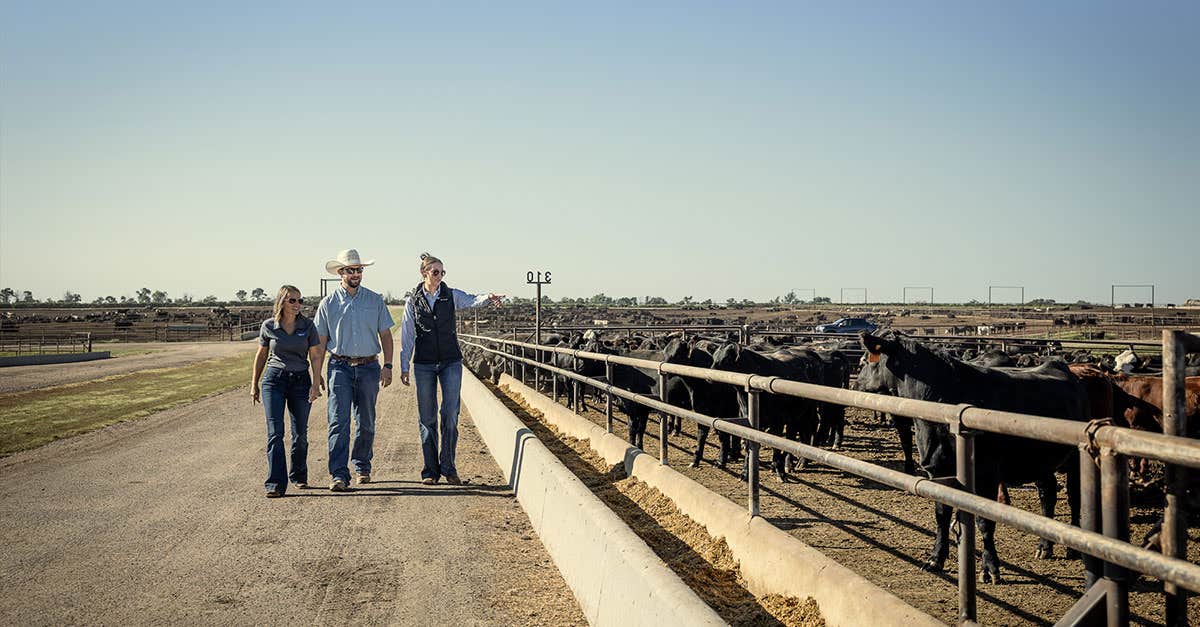
When it comes to finishing cattle, animal welfare isn’t just good practice; it’s a competitive advantage that can bring benefits to a feedlot’s employee retention and bottom line. Ask leading welfare experts like Dr. Michelle Calvo-Lorenzo, Chief Animal Welfare Officer at Elanco Animal Health, and you’ll learn that achieving desired animal welfare outcomes is about more than meeting minimum standards. It’s about creating a professional workplace culture where feedlot employees understand the science of stress, recognize subtleties in cattle behavior and their environment, and fine-tune every aspect of human-animal interactions for both animal and business success. Positive animal welfare goes hand in hand with cattle health, comfort, safety, and productivity. The best operations never stop learning from their cattle or their people, and attention to detail matters.
Understanding Stress: Beyond the Basics
Cattle are prey animals, and their stress responses run deep. Routine handling, pen moves, or even the presence of unfamiliar people can trigger lasting effects on physiology and behavior. But Michelle points out that not all stress is created equal. Acute stress, such as a one-time handling event, can be managed and minimized. Chronic, long-term stress, however, can be a real profit drain: it leads to immune suppression, reduced feed efficiency, and subtle shifts in behavior that erode gains over time.
The World Organization for Animal Health defines animal welfare as “the physical and mental state of an animal in relation to the conditions in which it lives and dies.” What separates resilient feedlots from the rest is their ability to recognize both the physical and mental states of their animals, particularly when such chronic and “invisible” stressors are experienced. For example, Michelle emphasizes monitoring microclimates within pens: shade, windbreaks, and pen slope aren’t just comfort features, they directly affect how cattle cope with weather extremes and regroup after handling. She also notes that cattle learn from every interaction, so the consistency of staff behavior, not just the technique, is what builds trust and reduces long-term anxiety.
Expert Strategies for Preventing and Managing Stress
While important, common recommendations focus on low-stress handling and facility design. Michelle likes to emphasize that the real edge can also come from integrating animal behavior science into every protocol:
- Anticipate ‘stress points’: Use records and data to identify when and where cattle are most vulnerable, such as during processing, pen moves, or major weather events. Plan for extra staff, slower pacing, or even adjusting schedules to avoid piling on stressors.
- Behavioral monitoring: Michelle advocates for “quiet observation” sessions: regularly watching cattle undisturbed to spot subtle changes in social hierarchy, feeding patterns, abnormal behaviors, or grooming. These early indicators can reveal stress before production or health data does.
- Effective and Personalized training: Beyond generic training, she recommends that all staff should be trained beyond the ‘how’ and ‘what’ of feedlot protocols; including the ‘why’ is key and should incorporate cattle behaviors and biology. Furthermore, developing “profiles” where staff are matched to specific tasks or cattle groups based on their personality, motivations, and behaviors can be very advantageous. This builds consistency and leverages individual strengths.
- Empowering staff: Over the years, Michelle has witnessed many feedlots establish a culture where employees feel empowered to suggest improvements and see those ideas implemented; when they did, animal welfare measurably improved. Regular debriefs and open forums after handling or processing events foster this culture.
The Science Behind Facility Design
Facility design is much more than just chutes and gates. Michelle highlights that every sensory detail in cattle handling areas can influence stress levels and movement. For instance, effectively positioned solid-sides prevent cattle from seeing outside commotion that might spook them as they move through alleys in handling facilities. Gates should swing smoothly and securely, and non-slip flooring is essential to prevent slips or falls, which can have both immediate and lasting animal welfare impacts.
The prey blueprint of cattle is the reason why they see very differently than humans and are more sensitive in their hearing. This means light transitions and noise levels are important considerations in facilities. Cattle may hesitate or balk at abrupt changes in lighting, so diffused, even lighting is ideal. Facilities must help direct cattle flow and reduce hesitancy, and curved alleys tap into natural cattle behavior and encourage forward movement without force. Minimizing sudden noises and high frequency sounds, like metal banging or handler hollering, can keep cattle calmer throughout handling.
Michelle stresses the value of handlers knowing how to use their facilities and completing regular facility audits, not just for maintenance but for comprehending how cattle interact with the facility and the people in it. Observing cattle during movement reveals bottlenecks, hesitation points, or stress reactions that may not be obvious on paper. Small changes, such as adjusting lighting or adding visual guides, can have a significant impact on reducing animal stress and improving handling efficiency.
Continuous Improvement: Turning Data into Action
The most progressive operations treat animal welfare and stress management as dynamic, ongoing processes. Michelle recommends benchmarking not just health and gain metrics, but also behavioral data such as the time it takes cattle to move through a chute, the frequency of slips/falls or vocalizations, and how quickly animals return to eating or resting after handling. These behavioral metrics often provide early warning signs of stress that production numbers alone might miss.
Regular team meetings to review this data encourage a collaborative approach and keep everyone focused on shared goals. Michelle suggests involving staff in data collection and interpretation, which not only empowers them but also brings valuable on-the-ground insights to the table. Technology can help here too. Tools like remote video monitoring, automated behavioral analytics, and environmental sensors provide real-time feedback that can be acted on quickly, turning insights into measurable improvements.
Adopting a mindset of continuous improvement means being willing to try new approaches, assess their impact, and adapt as needed. It’s about fostering a culture where incremental progress is celebrated and where everyone, from the newest staff member to management, is invested in better outcomes for both cattle and the operation as a whole.
Bottom Line: Expert-Driven Welfare Delivers Results
By layering foundational welfare practices with deep behavioral insight and a relentless focus on team engagement, Elanco customers can move from “good enough” to industry-leading. Michelle’s key message: Every detail matters, and the best operations never stop learning from their cattle or their people.
For feedlot managers looking to set a new standard, investing in advanced welfare strategies isn’t just ethical; it’s a direct path to healthier cattle, higher gains, and a stronger reputation in a changing marketplace.