

Turning Data into Decisions: How Feedlot Technology Supports Daily Performance
In a feedlot, small inefficiencies add up quickly. A few extra days on feed, a slight slip in conversion, or delayed treatment decisions can quietly erode margins. That's why savvy feedlot operators are using technology to see what's happening in real time and act faster. For Jacob Bueckert of Driland Feeders near Warner, Alberta, the goal isn't complexity; it's clarity. "The ability to make decisions faster has changed everything," he says. "When you can see what's happening today instead of next week, you can actually do something about it."

From observation to faster, smarter decisions
One of the biggest shifts in feedlot management over the past decade has been the move from manual record keeping to digital systems that provide immediate feedback. With computer-based programs tracking feed performance, health data and conversions, operations no longer wait weeks to understand how cattle are doing. Performance trends become visible in real time, allowing adjustments before losses occur.
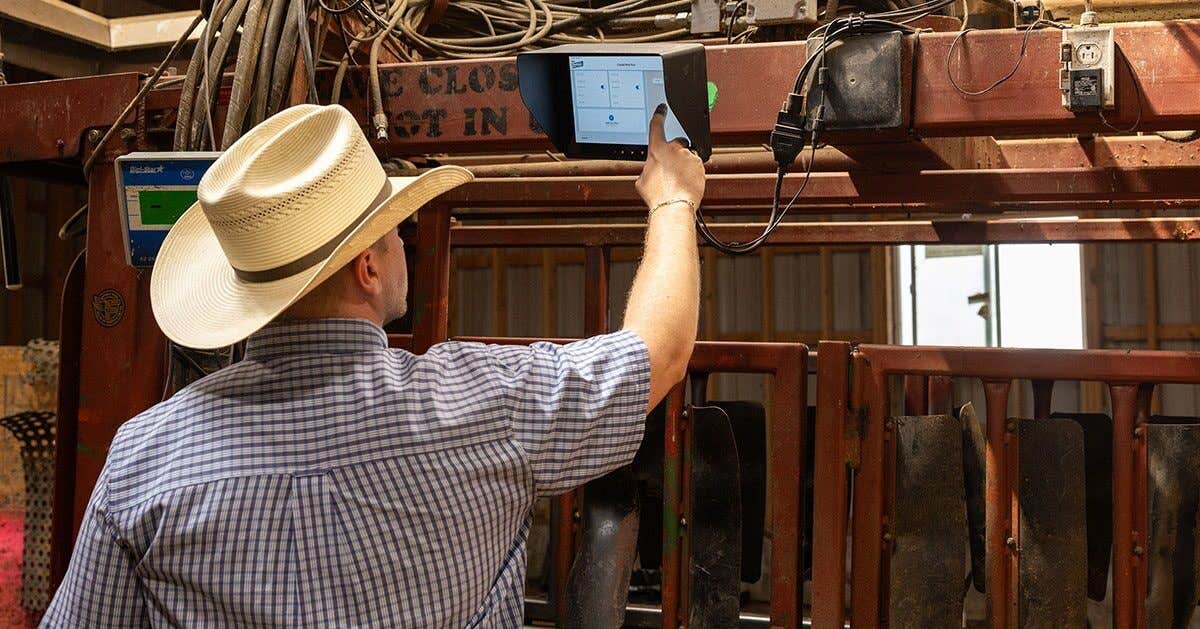
Camera-based cattle evaluation stands out as a particularly impactful technology at Driland Feeders. These tools use images and algorithms to assess variation within pens—weight, frame size, growth potential. "Large pens have significant variation, often 10 percent or more," Bueckert explains. "Without objective tools, you don't know if cattle are ready to go or if they still have growth potential." By identifying which animals are ready to market, managers can improve feed efficiency, achieve more consistent carcass outcomes, and optimize days on feed. Bueckert calls this type of sorting "a complete game-changer, especially in volatile markets."
Watching intake before it becomes a problem
Feed intake remains one of the earliest indicators of potential health or management issues. At Driland Feeders, camera systems combined with bunk reading algorithms help flag changes in eating behaviour early. Instead of relying solely on visual assessment, these systems provide consistent data that helps identify cattle that may be backing off feed. That early signal allows staff to respond before issues escalate into health pulls or performance losses. In practical terms, this means fewer surprises and better control over daily feed management.
Data, performance tools, and benchmarking: The three pillars of improvement
Animal health decisions are another area where technology has improved speed and accuracy. Data shared by veterinarians – including pull rates, mortality, treatment response, and recovery trends – helps guide protocols and expectations. Some operations now also use secure digital platforms to upload post-mortem images for remote veterinary review, which reduces delays when investigating health events and supports faster corrective action. Bueckert notes that having access to consistent health data helps staff understand how they are performing and where improvements are needed. Weekly, monthly and quarterly reviews keep everyone aligned around the same numbers.
Beyond monitoring, proven performance tools, such as strategic implant programs and feed additives, remain foundational to efficiency. These tools help cattle gain more efficiently using less feed and water per pound of beef produced, which supports both economic performance and sustainability goals while remaining practical and familiar to feedlot operators.
But collecting data is only useful if it is put into context. Benchmarking programs allow feedlots to compare performance against peers and identify where they excel or lag. At Driland Feeders, benchmarking is used to evaluate feed efficiency, health outcomes and cattle type performance. Over time, this has helped guide purchasing decisions by highlighting which types of cattle perform best in their system and which do not. Bueckert compares benchmarking to keeping score in a game. Without it, improvement is guesswork. With it, progress becomes measurable.
Building a system that works for your operation
Margins in feeding cattle are thin. That reality shapes how technology is evaluated. Bueckert often reminds staff that a penny per head per day adds up quickly over a year. Technology helps find those pennies by tightening feed management, improving sorting accuracy, reducing health losses, and improving labour efficiency. These gains are rarely dramatic on their own. But like compound interest, they build over time. That mindset drives technology adoption not for novelty but for incremental improvement.
Feedlots can collect enormous amounts of data, but not all of it is immediately useful. The key is turning information into insight. Bueckert emphasizes the importance of working with a team – including veterinarians, nutritionists, accountants and consultants – to interpret data and apply it practically. Shared performance data also improves communication by removing bias and grounding decisions in facts rather than assumptions. When everyone sees the same numbers, it becomes easier to align goals and understand how decisions in one area affect the rest of the operation. Start with the problem you are trying to solve, make sure the numbers make sense, and choose tools that support steady improvement.
Technology as a management tool, not a replacement
Technology does not replace experience, stockmanship, or judgment. Instead, it supports them. Digital tools, performance technologies, and benchmarking systems are designed to work together to provide clearer signals, better timing, and more confidence in decisions. In an industry where small advantages matter, technology is not about doing things differently for the sake of change; it’s about seeing what is happening sooner, acting with confidence, and continuing to chase that last one percent.