



Elanco brings ranchers and industry together to spotlight solutions
Many discussions about sustainability concentrate on one aspect: the environmental aspect. Although the economic side of sustainability often gets overlooked, it was a key focus during a recent Elanco-sponsored industry panel discussion.
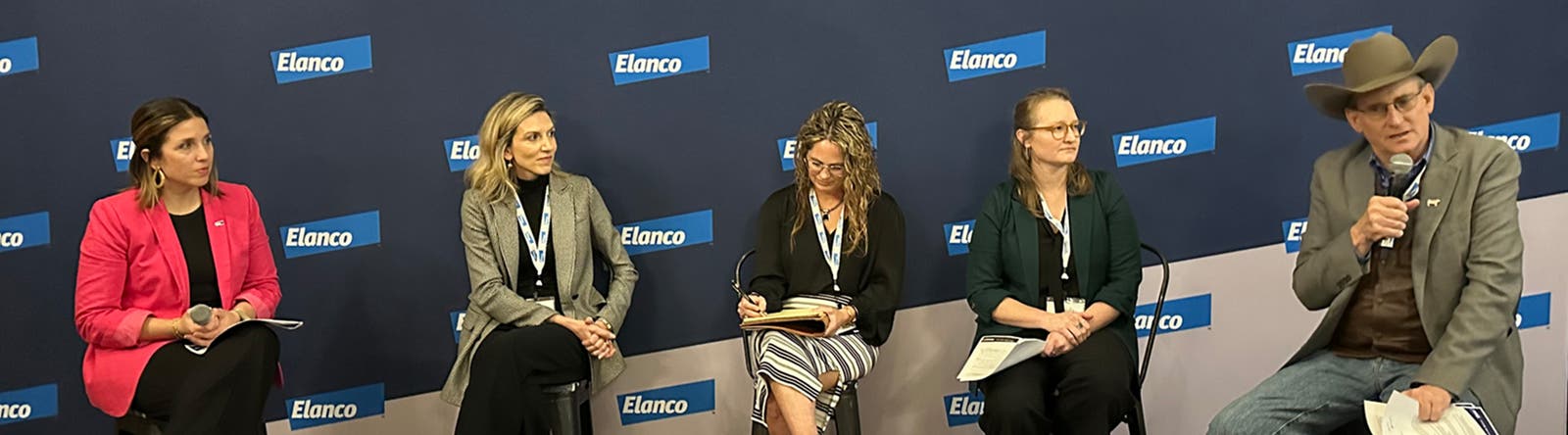
“Sustainability must be economically viable for livestock producers and our ranching communities,” says Katie Cook, vice president of farm animal sustainability at Elanco Animal Health and moderator of the panel The Evolving Landscape of Sustainable Beef.
Sustainability in cattle production is an ever-evolving concept, and the panelists discussed three significant shifts in the language used, the actions taken, and how value is captured.
The language of the land
Panelist Ashley McDonald serves as the executive director of the National Grazing Lands Coalition, an organization that offers technical assistance and resources to cattle producers to enhance their grazing lands.
McDonald emphasizes the importance of choosing words that resonate with the audience.
“To enact, enable, encourage, or motivate change, you must know your audience, what motivates them, and align with their values before you can gain trust and see movement,” McDonald says. “Efficiency is a fantastic word to use. At the end of the day, being a more efficient operation, regardless of your industry segment, almost always resonates.”
Panelist and cattle rancher John Ferry of JY Ferry & Sons in Utah believes the term "sustainability" is a buzzword that needs a clearer understanding and definition. He asserts that this requires measuring what one intends to manage.
“I'm a rancher, a farmer, and a feedlot operator. But most importantly, I’m a resource manager, and our greatest resource is land,” Ferry says.
As a result, Ferry clearly distinguishes his land from his farming and ranching operations. This approach ensures that each business stands on its own economically, and the land is not used to subsidize his enterprises.
“I listen to the land. Mother Nature always speaks to you, but you must learn her language,” Ferry says. “In ranching, it takes a long time to get into trouble, and it also takes a long time to get out. However, the land always has something to say as you ride among the cattle in the feedlot or the fields. Pay attention to what the land is telling you.”
“Beyond sustainability, we’re discussing regenerative culture, climate-smart production, stewardship and conservation. At its core, we're talking about ecosystem management and the resilience of rural communities,” Cook adds. “As stewards of the land, our ranchers and producers are at the forefront of this effort.”
Sustainability in Action
Panelist Aline Delucia, CEO and co-founder of AgSpire, focuses on advancing regenerative agriculture and acknowledges that sustainability varies for each producer and each piece of land.
“There's a growing appreciation for what producers have to manage,” Delucia says. “Projects will not be limited to just carbon or climate. We're going to take a more holistic approach to what’s being managed, including addressing water quantity, water quality, carbon, and the community.”
Ferry highlights the unique conditions in northern Utah, featuring arid deserts, mountain ranges and wetlands. Grazing on wetlands isn’t ideal, but he says they’re “changing that paradigm.”
One of the paradigms that Ferry believes needs to evolve within the ranching community is viewing wildlife as a resource rather than solely concentrating on the damage it causes. He states that hunting plays a role in this.
“We have developed a fairly sophisticated hunting operation, and it’s a win-win for us,” he says.
While many ranchers use herbicides to control invasive and aggressive phragmites, Ferry chose to consider the situation from a duck's perspective. He could apply herbicide sprays to manage phragmites, but that would also harm beneficial plants. Additionally, the aggressive phragmites might further expand their spread.
“In fact, spraying—if that's your only tool—enhances phragmites' ability to return. We use three tools: water control, spraying, and grazing,” Ferry says. “Phragmites are about 13% protein and are very palatable in the vegetative state. If cattle recognize what phragmites look like and taste like, they'll graze it. When you apply this grazing pressure to the plant, cattle will bypass the round stem and go straight for the phragmites. And once you apply that pressure and manage water to prevent flooding, you create ponds that attract ducks, geese, and wildlife.”
Ferry views new grass growth as the ultimate marker of sustainable regeneration.
“I tell people to ensure that you don't turn the ranch into a feedlot with your cattle numbers exceeding your grazing capacity, because that's when sustainability decreases and you're feeding more. You’ll need more outside inputs, and you must do more. This way, sustainability is independent. It's regeneration,” he adds.
Finding Value in Sustainability
Ferry equates many ranchers’ production goals with sustainability and return on investment.
“Beef producers enhance their genetics for higher quality grades. They improve forage systems. They increase brush management efforts. They prevent the spread of invasive weeds. They protect against wildfires,” Ferry says. “Many of these practices benefit emissions and carbon sequestration, while also improving water quality. These efforts align with consumer concerns and contribute to a healthier environment, ultimately leading to a more profitable operation. They create societal benefits. They strengthen the farm economy.”
Article was originally posted on Beef.com.