


Sandy Aehle
Sandy earned her Master of Science in biological science from the University of Missouri and has over 35 years of experience in foodborne pathogen research and mitigation strategies. Her areas of expertise include food safety, immunology, live poultry production, biosecurity and risk management practices, and the development and evaluation of Salmonella vaccines for poultry.

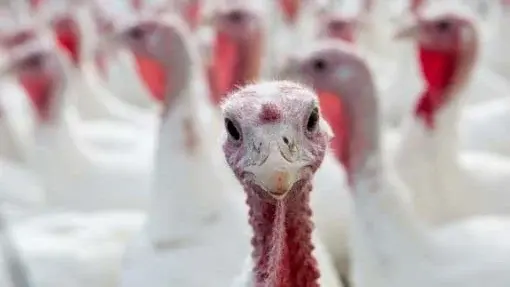
Today, the turkey industry produces more than 5.3 billion pounds of turkey products annually.1 In three decades, the turkey industry has gone from marketing a single product that was mainly consumed around holidays and special occasions to offering a range of products, from sausages to burgers to deli meats and more. Consumers are including more turkey in their diets because of the health benefits and versatility in product choices. But just as turkey products have become more diverse and popular, so has the public demand and expectation for safe and wholesome meat products.
Foodborne Illness Rates Drop, But Outbreaks Persist
For the first time in decades, the incidence rate of Salmonella infections has dropped significantly to 13.3%. According to the Foodborne Diseases Active Surveillance Network (FoodNet) of the CDC’s Emerging Infections Program, overall incidences of infections caused by enteric pathogens decreased 26% in 2020 compared to 2017-2019.2 While the fall in overall incidence rates is encouraging, three human outbreaks of salmonellosis due to turkey products have been documented since 2017. The risk of illness due to turkey products, particularly ground turkey, remains a public health concern.3 Control strategies in pre-harvest production have focused on management, biosecurity and vaccination, with vaccination demonstrating significant utility in reducing Salmonella prevalence in turkey flocks,4,5,6 and therefore helping prevent the contamination of turkey products.
Vaccines Reduce Salmonella Infections in Live Production which Translates to Lower Contamination through Farm-to-Fork Continuum
Vaccines help limit Salmonella transmission on farms and reduce the amount of Salmonella that birds carry into processing plants — where even the most effective interventions may not stop contaminated food from reaching consumers. Since 2010, the poultry industry has rapidly increased its use of vaccines, which has helped reduce contamination and human illnesses caused by Salmonella Typhimurium and S. Heidelberg in the U.S.7,8
Five years ago Elanco impacted how turkey producers could help reduce Salmonella contamination and human illnesses with the use of AviPro® Megan® Egg as part of a vaccination program.
AviPro Megan Egg Develops Protective Immunity in Turkeys
With increasing government interest in targeting Salmonella control in the pre-harvest stage and processing9,10, there is also increased interest in using alternative products in Salmonella control programs that address risk at all stages of turkey production. A comprehensive Salmonella control program should involve all opportunities of Salmonella entry into the supply chain. Vaccination is one component of a Salmonella control program that provides the turkey hen and poult protective immunity to control Salmonella infections.
Both live and inactivated Salmonella vaccines are available for use in turkey breeders. Since 2016, AviPro Megan Egg is the only USDA-licensed live Salmonella vaccine in the U.S. available for turkey breeders and commercial poults. The vaccine is easily applied in the hatchery or on the farm at one day of age using a coarse spray application. Booster vaccinations in the drinking water enhance protection against infections during the brood and grow-out period.
A Salmonella control program that includes vaccination of turkey breeders with live and inactivated vaccines can have an impact on reducing Salmonella transmission to offspring. Maternal antibody provided by immunized breeder hens is important in protecting poults against infections during brooding when poults are most sensitive to Salmonella infections. Continued protective immunity can be achieved by applying the vaccine in a coarse spray to commercial poults to stimulate long-term local, humoral and cell-mediated immunity through the life of the bird.
Vaccination of turkey breeders and poults is critical to an effective Salmonella control strategy, along with preventive biosecurity practices, to reduce the burden of Salmonella in flocks. Reducing Salmonella in pre-harvest production lowers the risk of contamination of turkey products, and in turn helps achieve the goal of reducing Salmonella foodborne illness.
Producers can contact their Elanco Technical Consultant to discuss ways to develop a well-planned vaccine program or learn more about AviPro Megan Egg and other Elanco solutions for Salmonella.
AviPro and Megan are trademarks of Elanco or its affiliates.
Tags
Food Safety
Salmonella
Turkey
vaccine
[1]National Turkey Federation. 2021. https://www.eatturkey.org/. Accessed October 24, 2021.
[2]Ray LC, Collins JP, Griffin PM, et al. Decreased incidence of infections caused by pathogens transmitted commonly through food during the COVID-19 pandemic — foodborne diseases active surveillance network, 10 U.S. sites, 2017-2020. MMWR Morb Mortal Wkly Rep. 2021;70:1332-6. DOI: http://dx.doi.org/10.15585/mmwr.mm7038a4
[3]Centers for Disease Control and Prevention, National Center for Emerging and Zoonotic Infectious Diseases (NCEZID), Division of Foodborne, Waterborne, and Environmental Diseases (DFWED). List of selected multistate foodborne outbreak investigations 2017-2021. https://www.cdc.gov/foodsafety/outbreaks/multistate-outbreaks/outbreaks-list.html. Accessed October 24, 2021.
[4]Aehle, SM. Control Salmonella Reading with monitoring, vaccination. The National Provisioner. November 14, 2020. https://www.provisioneronline.com/articles/110180-control-salmonella-reading-with-monitoring-vaccination. Accessed October 24, 2021.
[5]Lighty M. Use of Salmonella vaccines in commercial turkeys for pre-harvest reduction in Salmonella load at processing. AAAP Symposium & Scientific Proceedings, Abstr. 2019;57.
[6]Wooming B, Morgan M. Poster: Comparison of two Salmonella vaccines in commercial tom turkeys. AVMA/AAAP. 2015.
[7]Tauxe R. Public health challenge of Salmonellosis in the 21st century. Road map to reducing Salmonella: driving change through science-based policy. Salmonella-State of the Science at FSIS Food Safety and Inspection Service, USDA. September 22, 2020.
[8]Eskin S. Vaccines for poultry are crucial for preventing Salmonella contamination. September 24, 2020. https://www.pewtrusts.org/en/research-and-analysis/articles/2020/09/24/vaccines-for-poultry-are-crucial-for-preventing-salmonella-contamination. Accessed October 24, 2021.
[9]USDA, FSIS FSIS Guideline for Controlling Salmonella in Raw Poultry. July, 2021. https://www.fsis.usda.gov/guidelines/2021-0005.
[10]FSIS USDA Launches New Effort to Reduce Salmonella Illnesses Linked to Poultry. October 19, 2021. https://www.usda.gov/media/press-releases/2021/10/19/usda-launches-new-effort-reduce-salmonella-illnesses-linked-poultry.