




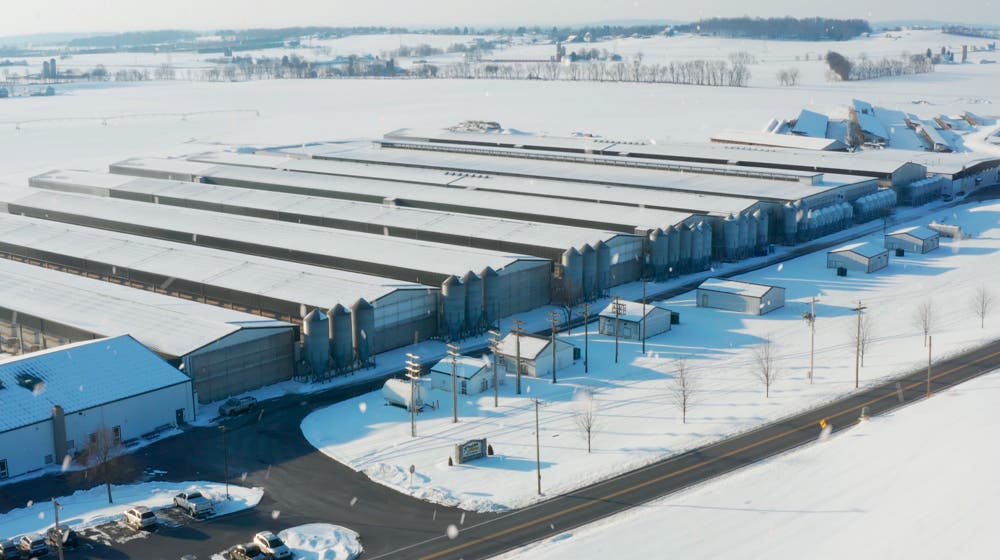
With each passing season, poultry producers face a new set of challenges. This is particularly true in winter, when colder temperatures, reduced ventilation and potential for pathogen spread from unwelcome vectors increase stress on bird health.
The lower the temperature, the more likely birds are susceptible to illness. As homeothermic animals, poultry can maintain an internal body temperature, but only when raised in a thermoneutral zone.1 Cold stress can result in a weakened immune response and influence the severity of infectious diseases. Further, when houses are closed up tighter to conserve heat, ventilation is reduced, thus increasing humidity, which creates an ideal environment for the spread of disease. Pests, such as rodents and insects, will attempt to migrate indoors, thereby raising the risk of exposure to Salmonella and other pathogens.
Research conducted in India to assess seasonal mortality rates of birds demonstrates the impacts of inadequate management during colder months: the overall mortality rate among poultry stocks was 34%, more than a third of the population.2 To prevent such significant losses, producers must exercise careful environmental control, consistent biosecurity enforcement and strategic disease prevention measures.
Prioritize Disease Prevention in Winter
Salmonella presents one of the more persistent and serious threats to flocks during the winter season. It is also extremely costly to the industry, with an economic impact of up to $2.8 billion due to healthcare costs, operational disruptions, flock losses and decreased productivity.3 There are multiple pathways poultry can be exposed to Salmonella throughout the production cycle, including contact with carrier animals such as rodents, insects and cats. Birds may also come in contact with the dangerous pathogen through contaminated feed, litter, water and even airborne particles within the poultry house.
The ideal conditions for pathogens like Salmonella to thrive are when airflow is reduced and humidity increases, which is a potential outcome for poultry houses sealed more tightly to preserve heat during the colder months. Birds that are under environmental stress are especially vulnerable to disease, with the potential for pathogens to spread quickly in closed-up houses.
Consistent monitoring of flock health is essential to prevent the breeding of bacteria and Salmonella contamination. Early signs of Salmonella presence can be detected through regular pre-harvest diagnostic testing and the implementation of targeted interventions. This proactive approach will minimize losses and improve food safety outcomes.
Elanco offers a pre-harvest Salmonella management program to help producers stay ahead of winter disease challenges and safeguard public health. The program includes comprehensive vaccinations with demonstrated success in preventing Salmonella infections, as well as insecticides that target disease-carrying pests like darkling beetles. These tools provide a strong line of defense against disease and help to protect both flock performance and product integrity.
Optimize House Conditions for Flock Health
Fortifying houses in anticipation of seasonal shifts protects flocks for optimal production. When birds are exposed to cold temperatures and reduced ventilation, it creates a stressful environment. This environmental strain weakens their immune systems, increasing their susceptibility to respiratory illnesses and infections like Salmonella. Mitigation requires producers to maintain temperatures within the thermoneutral zone, or approximately 21–28°C.4 Allowing birds to regulate their body temperature without expending extra energy supports efficient growth and overall health.
Ventilation is equally important, as inadequate airflow can trap moisture, raise ammonia levels, and lead to wet litter. High ammonia concentration in poultry houses is more likely to occur during the winter months, leading to immune suppression, inflammation and reduced performance, even with short-term exposure above 25 ppm.5 Proper air exchange is necessary to manage humidity and prevent the harmful effects of ammonia and other gases.
High humidity levels can also cause wet litter, which encourages the growth of harmful bacteria. Using dry bedding material, repairing leaks and preventing condensation buildup are ways to keep litter dry. Finally, producers should inspect and secure poultry houses by sealing cracks and testing heating systems to safeguard the poultry house environment through the winter.
Winter Biosecurity and Feed Safety Best Practices
Winter requires reinforcement of biosecurity protocols to prevent the introduction and spread of pathogens. As mentioned previously, pests like rodents and insects will attempt to move indoors to escape cold temperatures. These are potential vectors for disease that can be prevented from entering poultry houses by sealing structural gaps, maintaining clean perimeters and implementing an integrated pest management program.
Staff and visitors should be reskilled in biosecurity compliance, including the use of dedicated, sanitized footwear at every house door and prohibiting outside shoes or equipment from crossing the line of separation. Remind employees to report any contact with outside birds and rotate insecticides from different chemical classes to minimize the risk of resistance.
Integrating diagnostics and vaccinations into winter routines is equally essential for maintaining biosecurity. Regular diagnostic testing and administering vaccinations add an important layer of protection. Elanco has a team of food safety experts prepared to offer guidance and support tailored to specific operations. Staying ahead of threats allows for timely and targeted interventions, preventing losses that can significantly impact production goals and profitability.
Winter conditions can create a perfect storm for health setbacks and food safety issues. Taking proactive steps to prepare for cold weather protects the well-being of flocks, maintains bird performance and sustains productivity. By performing pre-harvest diagnostic testing, securing housing with adequate ventilation and reinforcing biosecurity measures, poultry producers can dramatically reduce stress on their flocks and limit the risk of harmful illnesses. Elanco offers a wide range of tools and expertise to help prepare flocks for winter. To learn more about diagnostics, pre-harvest Salmonella control strategies and winter management, reach out to your Elanco representative today.
1Abo-Al-Ela, H. G., El-Kassas, S., et al. 2021. "Stress and immunity in poultry: Light management and nanotechnology as effective immune enhancers to fight stress." Cell Stress & Chaperones. 26.3: 457-472. https://doi.org/10.1007/s12192-021-01204-6
2Dinesh, C., Sharma, R. K., et al. 2021. "Mortality pattern among poultry stock reared under intensive management in sub-temperate condition of Himachal Pradesh." Journal of Animal Research. 11.2: 323–328. https://doi.org/10.30954/2277-940X.02.2021.14
3Scharff, R. L., 2020. "Food Attribution and Economic Cost Estimates for Meat- and Poultry-Related Illnesses." Journal of Food Protection. 83.6: 959–967. https://doi.org/10.4315/JFP-19-548
4Apalowo, O. O., Ekunseitan, D. A., et al. 2024. “Impact of Heat Stress on Broiler Chicken Production.” Poultry. 3.2: 107-128. https://doi.org/10.3390/poultry3020010
5Sheikh, I. U., Nissa, S. S., et al. 2018. "Ammonia production in the poultry houses and its harmful effects." International Journal of Veterinary Sciences and Animal Husbandry. 3.4: 30–33.