




The poultry industry has a critical role to play in meeting USDA FSIS (Food Safety and Inspection Service) Salmonella reduction goals, thereby advancing food safety for consumers. By FY 2026, the industry should achieve a 10% reduction of Salmonella Enteritidis, Typhimurium and Infantis. This responsibility is shared across both live-side and production processes.
Although the FSIS Salmonella framework is still under review, the industry can proactively take steps to bolster their food safety programs now. Investing in food safety measures can shield poultry integrators from reputational risk, financial loss, and downstream issues should contaminated food reach consumers that could arise if a Salmonella control program is not managed effectively.
The Power of Salmonella Vaccines
Poultry vaccines offer a powerful tool in the battle against Salmonella. They provide three key benefits:
- Reducing Colonization of Invasive, Harmful Serotypes – Vaccines reduce harmful pathogens and subsequent food safety risks.
- Reducing Overall Salmonella Load – Vaccines reduce preharvest Salmonella quantity, reduce plant Salmonella burden allowing for increased plant antimicrobial effectiveness.
- Reducing Plant Salmonella Positives – As a result of reduced Salmonella positives at the plant, companies improve their USDA status and reduce customer concerns.
Review of Live Vaccine Modes of Action
Live Salmonella vaccines work by mimicking a natural infection, which stimulates the bird's immune system to produce a robust response. This simulation of a natural infection prompts the production of antibodies and activates cell-mediated immunity, resulting in a two-pronged approach that can significantly reduce Salmonella colonization and shedding. This type of Salmonella vaccine also leverages the principle of competitive exclusion.
This mechanism encourages the growth of beneficial bacteria in the gut, occupy niches in the gut that would otherwise be available to Salmonella, thereby preventing its establishment and proliferation. This dual action of immune stimulation and bacterial competition enhances the overall efficacy of live Salmonella vaccines in poultry.
Demonstrating the Effectiveness of Vaccines Through Research
The effectiveness of live Salmonella vaccines has been demonstrated through various research studies that highlight their quantifiable impact. Key findings from challenge studies show:
Live ST Vaccine Reduction of S. Infantis
Reduction in S. Infantis Colonization - Significant decreases in colonization have been observed in the liver/spleen and ceca.
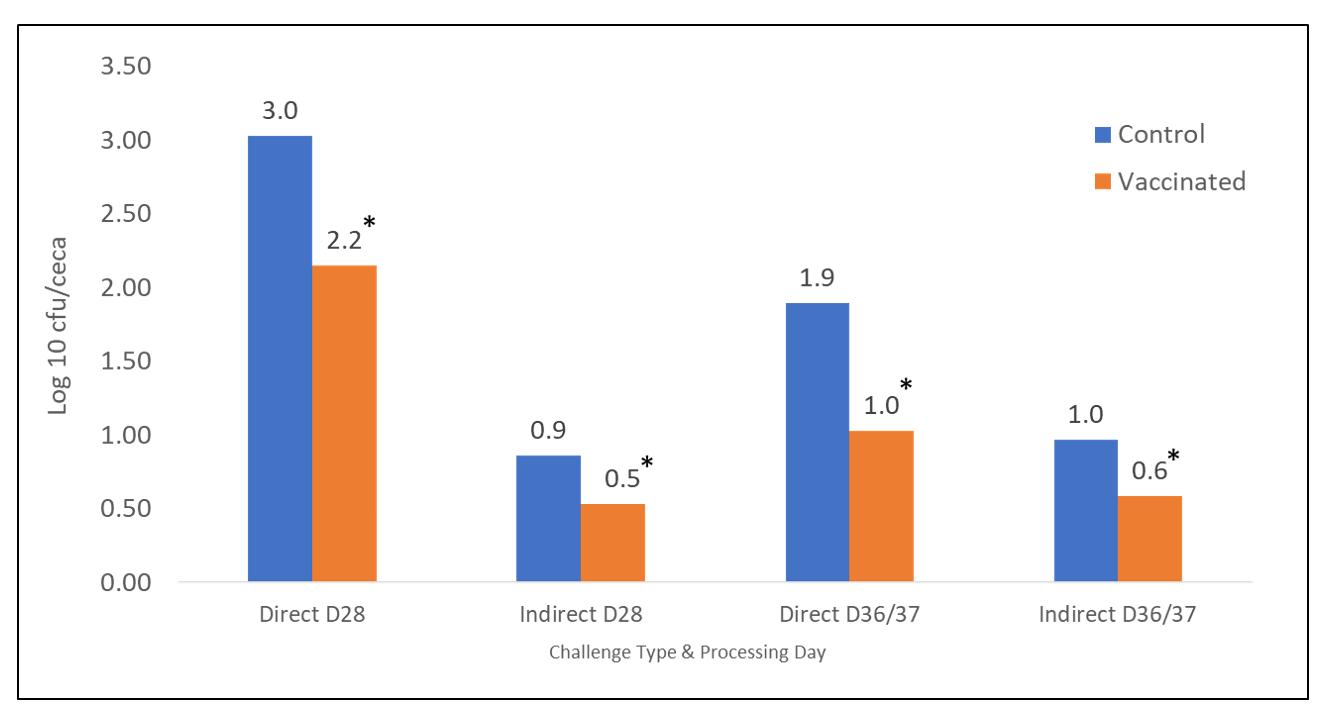
*p< 0.05
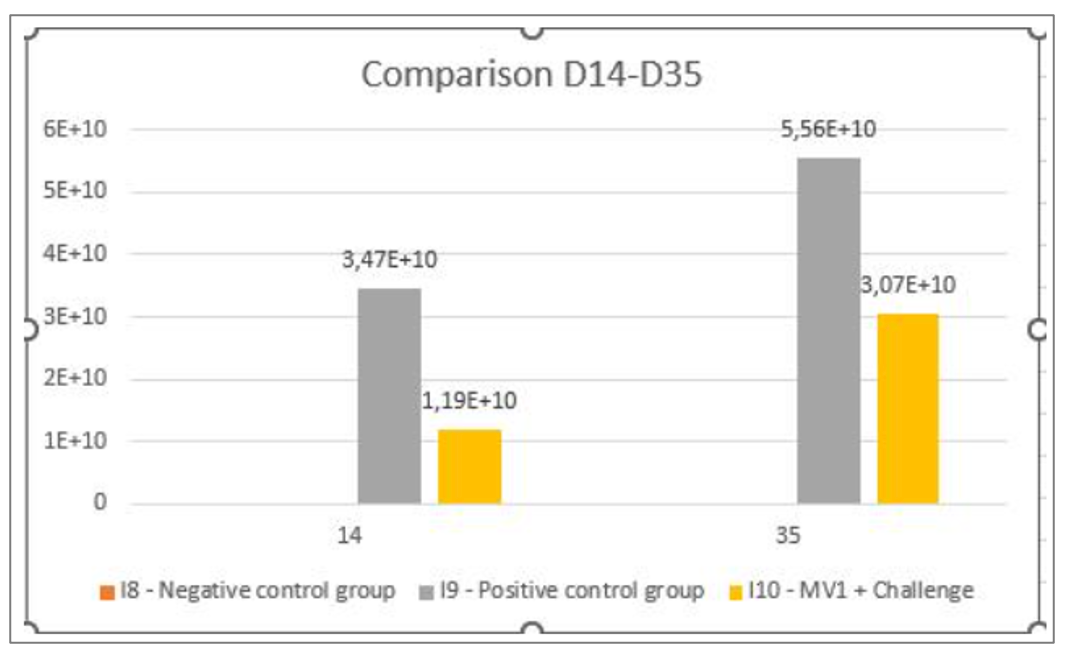
Live ST Vaccine Reduction of S. Minnesota
Decrease in S. Minnesota Colonization - There is a notable reduction in the presence of this serotype within vaccinated flocks.
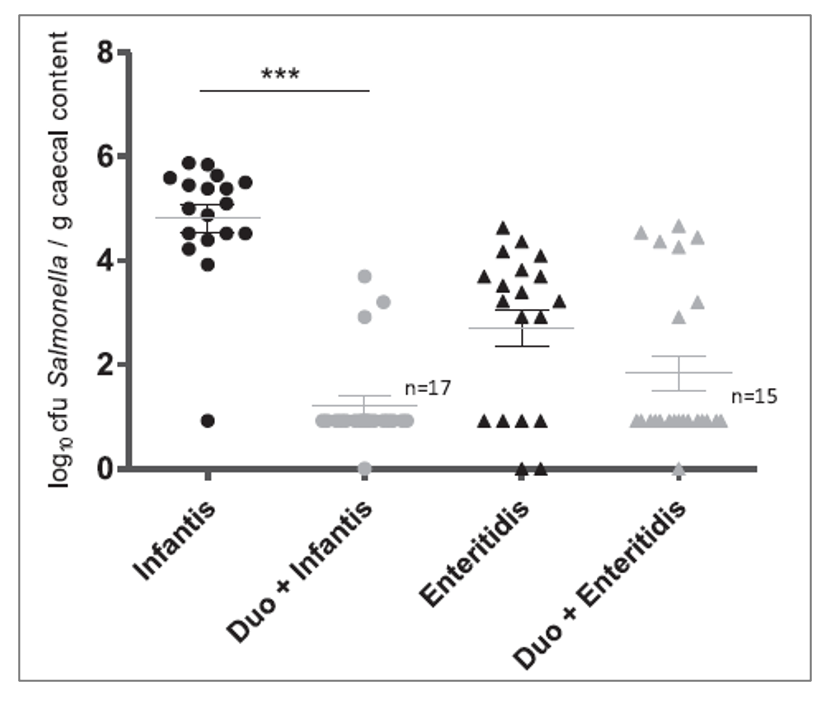
Live ST + SE Vaccine Impact on Salmonella
Impact on Multiple Salmonella Serotypes - Vaccines have shown effectiveness against various serotypes, including Typhimurium, Enteritidis and Heidelberg.
Research Findings
These findings illustrate the broad-spectrum efficacy of live Salmonella vaccines. By targeting multiple serotypes, vaccines ensure comprehensive protection, which is crucial for mitigating the risk of Salmonella outbreaks. The reduction in colonization levels means fewer bacteria are present to contaminate carcasses during processing, thereby enhancing overall food safety.
Demonstrating the Effectiveness of Vaccines Through Field Evaluations
Field evaluations provide real-world evidence of the vaccines' effectiveness. These evaluations have reflected a reduction in Salmonella-positive samples across various poultry products:
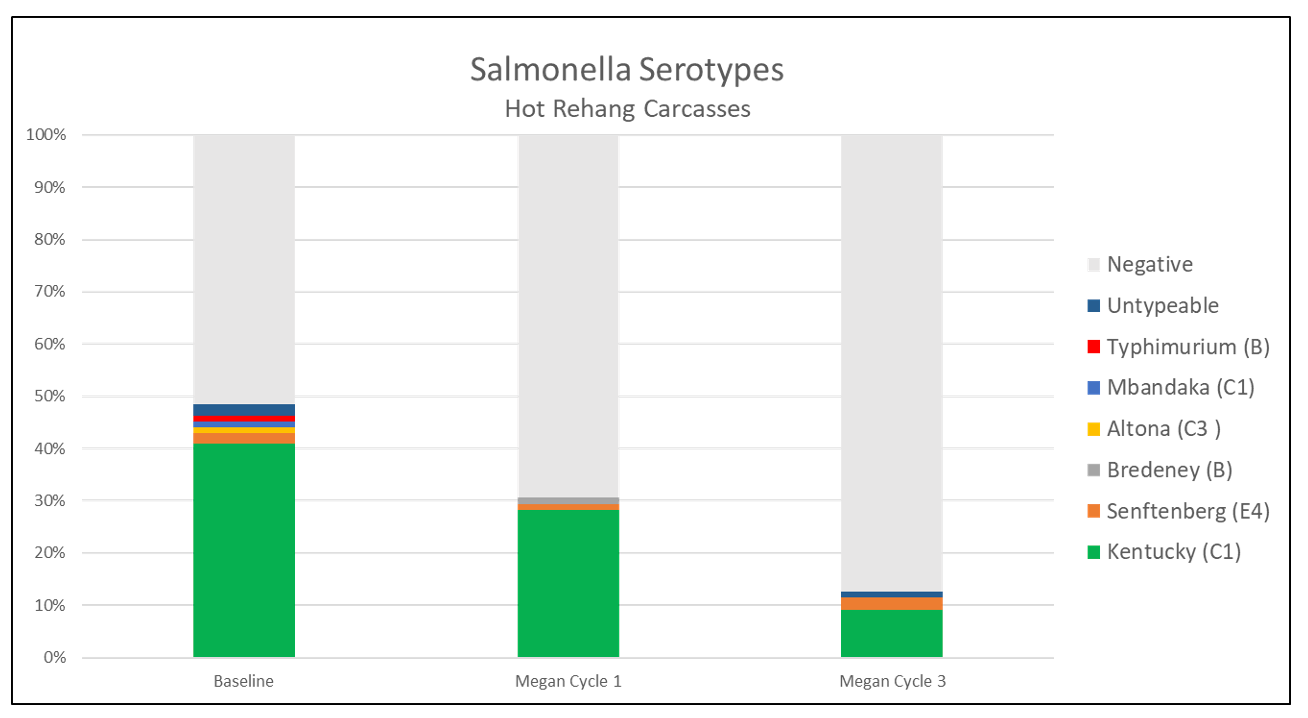
Live ST Vaccine Reduction of Salmonella
Broiler Rehang Carcasses - Vaccinated flocks have shown a decrease in Salmonella prevalence at the rehang stage, where birds are moved from the slaughter line to the evisceration line.
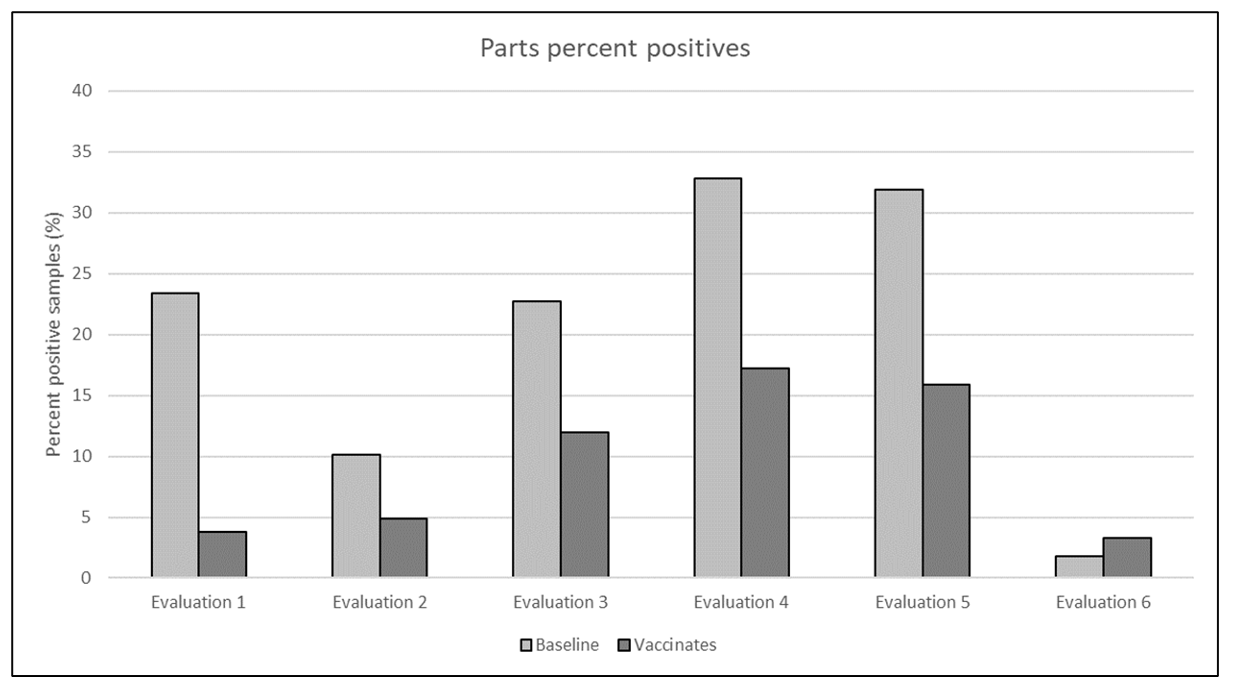
Salmonella Vaccine Impact on Broiler Parts
Broiler Parts - There is a marked reduction in Salmonella detection in parts such as wings, thighs, and breasts.
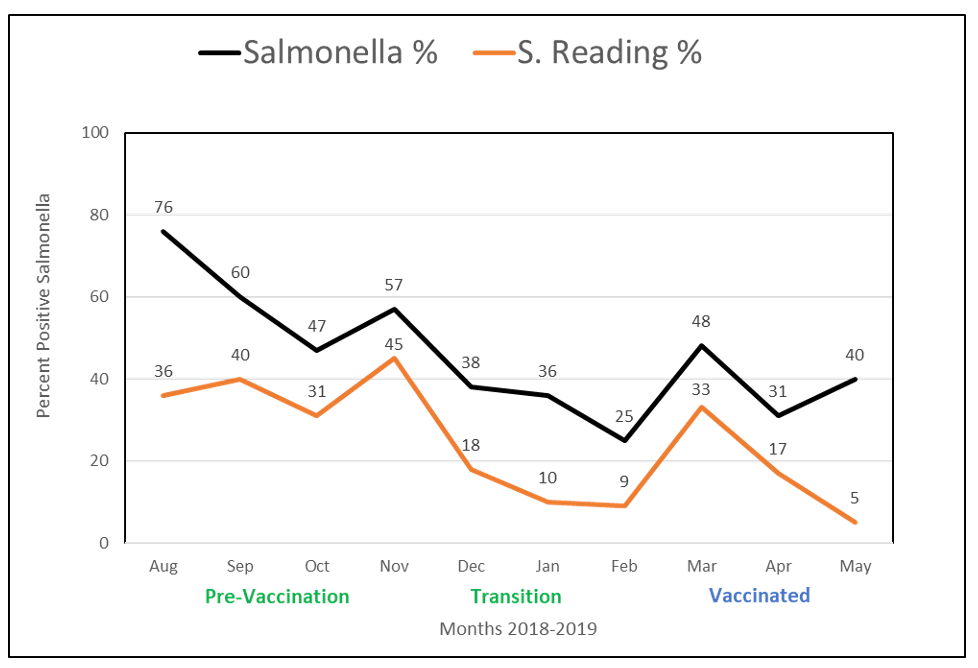
Salmonella Vaccine Impact on Ground Turkey
Ground Turkey - Field data indicate that ground turkey from vaccinated flocks has lower Salmonella contamination levels.
Vaccines are an important component to an overall Salmonella control program and play a vital role in poultry production, assisting to reduce harmful pathogens and subsequent food safety risks.
Vaccines provide important competitive exclusion, stimulate the immune system, and offer cross-protection against various Salmonella serotypes. Research and field evaluations consistently demonstrate the effectiveness of live Salmonella vaccines in reducing contamination levels across different poultry products.
For tailored support in implementing these interventions, contact your Elanco technical consultant today.
Elanco and the diagonal bar logo are trademarks of Elanco or its affiliates.