Sheep ticks
Ticks can cause health issues to sheep as they spread both viral and bacterial disease from host to host, so it is important to be prepared in high risk areas.
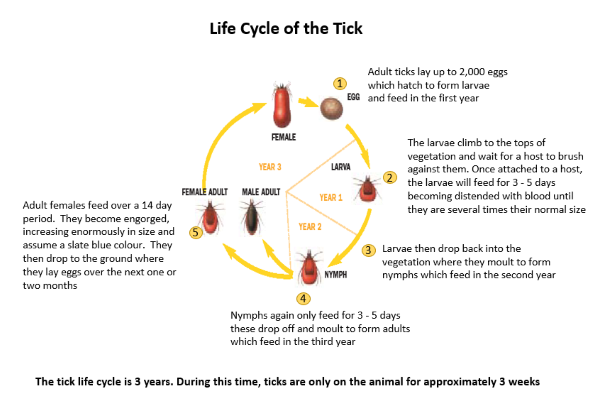
Ticks are small, blood-sucking ectoparasites that attach to the sheep by biting into the skin. The main sheep tick is the castor bean tick, Ixodes ricinus. This is a three-host tick, meaning each stage feeds on a different host detaching and moulting between hosts.

Ticks can have significant effects on sheep welfare and production, and recent studies suggest ticks are becoming more numerous and widespread throughout the UK. In sheep, they transmit three important diseases:
- Louping ill - symptoms are wobbly gait, trembling, seizures or even sudden death
- Lamb pyaemia (“cripples”) - resulting from infected tick bites, can cause lameness, paralysis, ill thrift and death in young lambs
- Tick borne fever (TBF) - causes reduced immunity (respiratory / joint infections) and reproductive problems.
Ticks will also feed on humans where they can transmit Lyme's disease, a potentially debilitating disease.
Ticks thrive in areas of rough grazing, moorland, heath or woodland, as they need dense, damp environments in order to survive when they are not feeding on an animal.
Ticks don't jump or fly from animal to animal, but instead wait for a host on vegetation, and are picked up when an animal brushes through the vegetation.
Traditionally there was a spring and autumn rise in tick activity, and this was the case in all areas where ticks were considered a problem. Changes in weather/climate has seen tick activity being seen throughout the year, with peaks in spring and autumn. Tick numbers are increasing due to weather changes and to a greater extent by environmental management changes (eg withdrawal of effective bracken control treatments and restrictions on controlled heather burning) that allow larger areas of dense vegetation where humidity levels remain high, allowing for greater tick survival in the environment.
Effective control relies on reducing tick numbers in the environment by vegetation management, avoiding areas of high tick density by grazing controls and wildlife management, and reducing the impact of tick borne diseases by controlled exposure of livestock to infected ticks and strategic treatments with both SP pour on and OP dips.
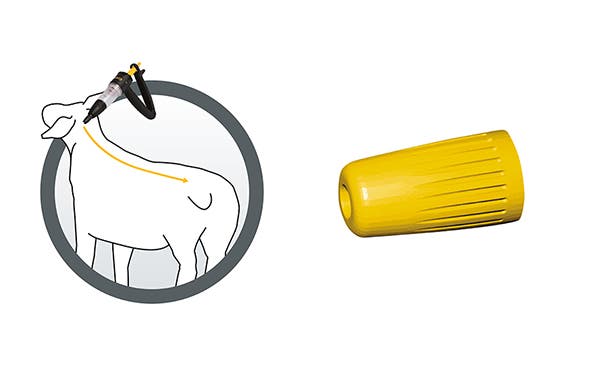
Crovect™ 1.25% w/v Pour-on Solution for Sheep has a claim to kill ticks for 10 weeks, but towards the end of this period (and sometimes as early as 6 weeks post treatment depending on tick numbers) the ticks will survive long enough to bite and feed and so will transmit diseases before they die.It is important to use the correct nozzle for applying Crovect: using the straight nozzle of the Pour On gun, apply as a pin-stream from the crown of the head to the top of the rump.

Other treatment options are alphacypermethrin or deltamethrin, or a diazinon organo-phosphate based plunge dip.
Crovect™ 1.25% w/v Pour-on Solution for Sheep contains cypermethrin (cis:trans/80:20). POM-VPS.
Further information is available from the Summary of Product Characteristics. Advice should be sought from the medicine prescriber prior to use. Use medicines responsibly. Prescription decisions are for the person issuing the prescription alone.
Crovect™, Elanco™ and the diagonal bar logo are trademarks of Elanco or its affiliates.
For product related technical queries, contact the Elanco Vets team:
Telephone: 01256 353131, selecting option 1 for technical services
Email: ElancoVets@elanco.com*
*please note this inbox will be checked during the next business day. If you require an urgent response to a product-use query, suspected adverse event or quality complaint regarding an Elanco product, please call 01256 353131 choosing option 1 for technical services. Outside of office hours, your call will be forwarded to our medical answer service and an Elanco representative will call you back. Thank you for your understanding.