Blowfly strike in sheep
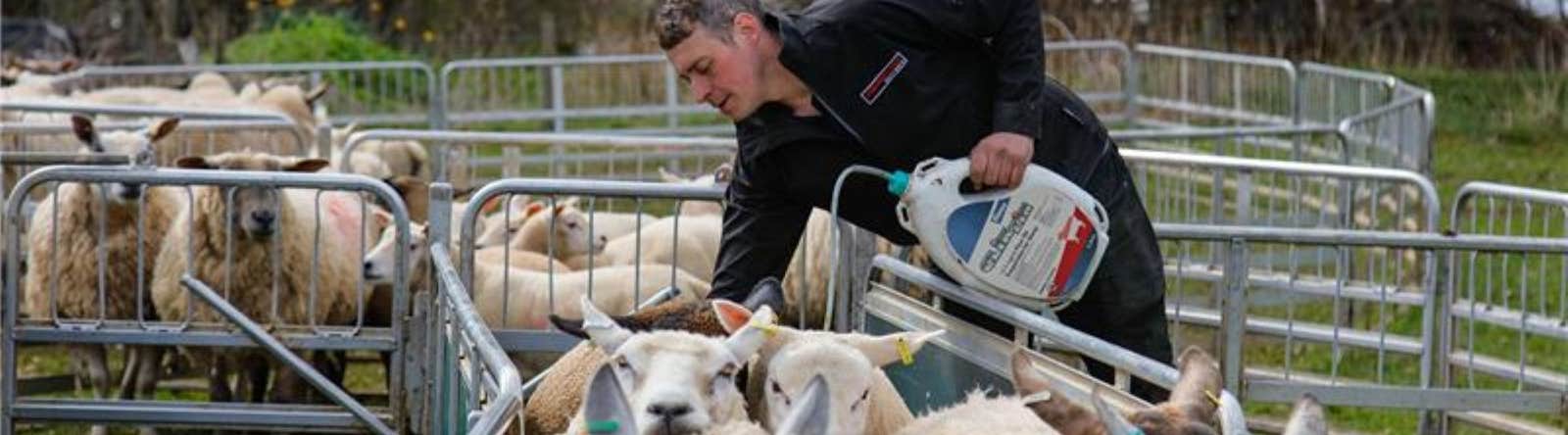
Blowfly strike is a serious disease affecting sheep of all ages. Preventative treatment of ewes and lambs is always the most cost-effective strategy against blowfly strike2.
Changing weather patterns have made predicting the start of the blowfly season increasingly challenging, but there are tools to help. The SCOPS Blowfly Emergence Forecast uses temperature data to predict blowfly spring emergence and identify the best timing for preventative treatments. The Blowfly Tracker provides alerts when strike cases are reported in your area, and allows you to log cases to help inform other farmers.

Blowfly strike - why it matters
- Blowfly strike is common: Blowflies are one of the most widespread ectoparasites affecting UK sheep and are regarded by farmers as the most challenging1. This high prevalence means most flocks are at risk of blowfly strike.
- Blowfly strike hits fast and hard: By the time strike is visible, animal welfare and flock performance are already compromised. Blowfly strike costs the UK sheep industry millions of pounds every year2.
The impact of blowfly strike
Blowfly strike causes major issues for sheep farmers:
 Growth rate of lambs
Blowfly strike can reduce growth rates and delay finishing, prolonging lamb retention and increasing competition for grazing needed by ewes
 Body condition of ewes
Weight loss following blowfly strike can delay recovery to target body condition for tupping, increasing energy requirements and supplemental feed use
 Fertility of ewes
Loss of body condition, an effect of blowfly strike, can impair ewe fertility, reducing lamb numbers and twin rates4
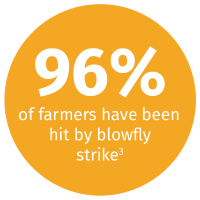
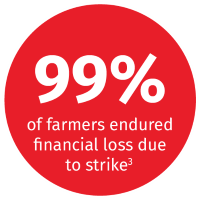
One sheep struck is one too many.
"We saw the detrimental impact [blowfly strike] can have on ewes and lambs – it not only leads to welfare issues, but results in reduced productivity, which was demonstrated in lower fertility and weight gain."
John MacInnes, Culbhuirg Farm
Early, extended blowfly control is essential
- Unpredictable blowfly season - typically the blowfly season extends from spring to autumn, but the season is becoming longer and more unpredictable - rising temperatures and periods of high humidity create ideal conditions for early fly activity and larval development. Blowfly strike risk in some areas now extends from March through to November. 82% of farmers agree that the blowfly season is getting longer.3
- Flies breed fast - an adult blowfly (Lucilia sericata) lives on average for 30 days and lays up to 3,000 eggs in its lifetime; in the right conditions fly numbers can rapidly escalate:
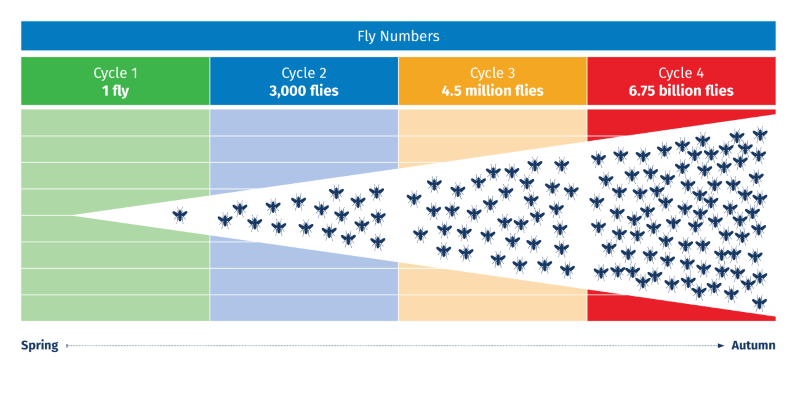
- Acting early breaks the cycle – preventing the first generation of flies from multiplying helps reduce strike pressure on the flock throughout the season.
- The potential for rapid escalation in fly numbers combined with an extended season reinforces the need for early and extended blowfly protection.
The blowfly life cycle
The blowfly overwinters in the soil as a pupa, until soil temperatures reach 9°C when the pupa emerges as an adult fly. Each adult female produces up to 3,000 eggs, which are deposited onto sheep in multiple batches of around 200 at a time. Eggs hatch after 12-24 hours into first stage larvae which are small (about the size of a grain of rice) and cause no damage. However, the second and third stage larvae will rapidly damage the skin and underlying tissues, with severe damage occurring in as little as 1-2 days after eggs are laid2.
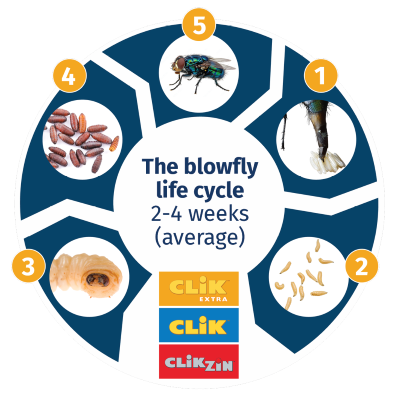
- Eggs deposited in the fleece hatch after 12-24 hours
- 1st larval stage - no mouthparts, so harmless to sheep
- 2nd and 3rd larval stages - active mouthparts, feed constantly on the sheep for 3 days.
The CLiK range prevents development to the damaging 2nd and 3rd larval stages*. - Pupation - 3rd stage larvae drop off the sheep to pupate in the soil
- Blowfly emerge - after 2 weeks warm weather - and the cycle continues
Preventing blowfly strike in sheep
By the time an animal is struck, both welfare and flock performance are already compromised. The aim is prevention, enabling better control and more effective planning of time and resources to protect the flock.
Blowflies are attracted to lay their eggs on areas of soiled fleece and wounds, and on carcasses. Therefore, the key to blowfly control is to minimise blowfly breeding opportunities by:
- managing deadstock: remove deadstock as quickly as possible, and keep deadstock covered while waiting for collection
- managing flock health: minimise faecal soiling through good worm control and fleece management, and through treating wounds, including foot infections
- using a preventative treatment early in the season: flies breed fast, and in the right conditions numbers can escalate rapidly. Acting early, and preventing the first wave of flies from breeding helps reduce the strike pressure on the flock throughout the season. Insect Growth Regulators (IGRs) disrupt the blowfly lifecycle, preventing the harmless first stage blowfly larvae developing into the damaging second and third stage maggots responsible for blowfly strike.
The Elanco CLiK™ portfolio, made up of CLiK™ EXTRA, CLiK™ and CLiKZiN™ are IGRs that break the blowfly life cycle before the damage occurs, delivering trusted and flexible blowfly protection.
How do you compare?
See how you compare with our downloadable PDF – also full of key information, industry discussion, and recommendations for protecting against blowfly.
Trusted and flexible blowfly prevention from the CLiK range
More resources on blowfly strike in sheep
*When using the CLiK range, eggs and 1st stage larvae will still be present but are harmless to sheep.
- Kynetec market research August 2023
- Lihou K.,, Lovatt F., Wall R. (2023) Fly Strike in sheep: updates on the cost of control. In Practice, April 164-170
- National Farm Research Unit, Blowfly Study April 2018.
- Cam, M. A., Garipoglu, A. V., & Kirikci, K. (2018) Body condition status at mating affects gestation length, offspring yield and return rate in ewes Arch. Anim. Breed., 61, 221-228