Nematodirus in sheep
Nematodirus is a serious disease in lambs caused by the Nematodirus battus gastrointestinal (GI) worm. This is usually the first of the GI worms to affect lambs at the beginning of the grazing season; depending on the number of worm larvae ingested by lambs, it can cause severe disease or even death. It is vital to monitor the risk of Nematodirus, diagnose accurately and treat promptly if diagnosis is confirmed. It's important to note that other worms may also be present at the same time as Nematodirus, so it's worth doing a faecal egg count to check what's there.
Nematodirus disease in lambs is caused by the Nematodirus battus worm. The lifecycle is different to that of other gastrointestinal worms and is affected by the weather, which also then affects the volume of larvae that the lambs are exposed to.
Lifecycle of Nematodirus battus
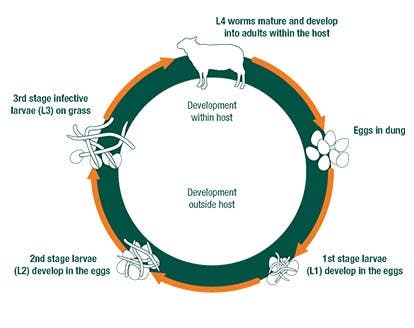
Eggs that are passed out in the dung of the adult sheep in spring develop slowly through the first (L1), second (L2) and third (L3) larval stages inside the egg, and can survive on pasture for up to two years. They hatch from the third stage into the infective larvae when the weather changes from a prolonged cool period (over winter) to an average daily temperature of at least 10˚C.
The severity of disease in lambs depends on the volume of larvae hatching as a result of the weather:
- The 'Mass Hatch': If the weather is consistently warm after a prolonged cool period, the majority of larvae will hatch from the L3 stage to infective larvae at the same time - which is called a 'mass hatch'. If it occurs when naive lambs of any age are grazing, the immature worms will be ingested and cause sudden and devastating damage to the lambs’ intestines, resulting in severe disease, even death. The first indication many farmers may see of Nematodirus is a dead lamb.
- 'Trickle Hatching': If hatching is over a longer period of time, only small numbers of larvae will hit intestines at a time, meaning that lambs will have the chance to gain some immunity and the disease will not be so evident. However, depending on the level of gut damage, this lower level of infection can still cause a significant growth check at a time when lambs should be hitting their maximum growth rates.
- Early hatching: Similarly, if the hatch occurs early, before lambs are consuming significant amounts of grass, there is a reduced risk of disease. Once hatched, the larvae don’t survive for long on pasture so damaging infections in lambs will have been avoided.
Immunity to Nematodirus battus develops quite quickly following exposure, so adult animals that have had some exposure during the previous grazing season are not affected.
Disease is caused by larval stages damaging the small intestine of lambs. This damage prevents the gut wall from exchanging fluids and nutrients properly, so the first symptoms lambs would show are
- diarrhoea
- lack of appetite
- dehydration and thirst
In the case of the mass hatch, there will be a sudden onset of profuse diarrhoea with associated dehydration, and often death. As ewes are unaffected they are often seen to be still grazing whilst the thirsty lambs are crowded around drinking places.
Veterinary diagnosis is based on examination of faecal samples and post-mortem examinations and often rest on determining between Nematodirus and acute coccidiosis which have similar clinical signs, occur at the same time of year, and can be present at the same time.
Faecal Egg Counts (FECs) will identify coccidiosis but not Nematodirus as the damage is done by immature larvae that are not producing eggs. It is vital that a diagnosis is made so that farmers can treat the right disease with the right product.Treat promptly: In the case of an outbreak, anthelmintic treatment of all lambs, plus supportive therapy to manage dehydration, will be advised. Affected animals may need to be housed for a short period. Group 1 benzimidazole (BZ) - white drenches - are the active of choice against Nematodirus battus as this group has high activity against Nematodirus and there have been very few confirmed cases of resistance to white drenches in this parasite in the UK.
- Monitor the risk
The SCOPS Nematodirus forecast is a vital tool in managing the Nematodirus risk. Using live weather station data, these forecasts predict the level of challenge and time of hatching at each location and are updated daily. They will show when the risk is high in the local area. - Treat promptly
Treatment with anthelmintics should be administered following SCOPS Nematodirus risk warnings and repeated as necessary over the risk period. It is unwise to wait for clinical signs of diarrhoea to occur before treating as severe gut damage can occur, causing long term effects on growth rates. - Grazing management
Grazing management and the use of ‘low risk’ pasture can go a long way towards controlling a Nematodirus problem. Avoid grazing this years’ lambs where young lambs (3-12 weeks) have grazed the previous year, and so prevent exposure to large numbers of larvae that are ready to hatch.
- Monitor the risk
Like many parasites, this nematode has shown an ability to adapt its behaviour and in some areas some outbreaks of disease are now being seen in autumn. This occurs when eggs on pasture develop to the third larval stage – without overwintering – and hatch in the autumn, with a ‘mass hatch’ potentially occurring in the warm, wet period following a dry summer. Lambs that avoided exposure in the spring are particularly at risk.
Elanco™ and the diagonal bar are trademarks of Elanco or its affiliates.
For product related technical queries, contact the Elanco Vets team:
Telephone: 01256 353131, selecting option 1 for technical services
Email: ElancoVets@elanco.com*
*please note this inbox will be checked during the next business day. If you require an urgent response to a product-use query, suspected adverse event or quality complaint regarding an Elanco product, please call 01256 353131 choosing option 1 for technical services. Outside of office hours, your call will be forwarded to our medical answer service and an Elanco representative will call you back. Thank you for your understanding.