
The benefits of good worm control in sheep
Good worm control in sheep is essential to optimise flock health, weight gains and productivity. Every farm is slightly different and the quality and quantity of feed available differs - so it's important to make the most efficient use of the feed that's available.

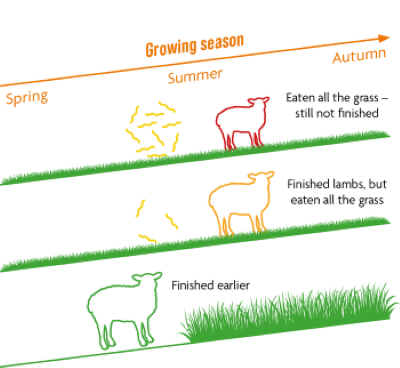
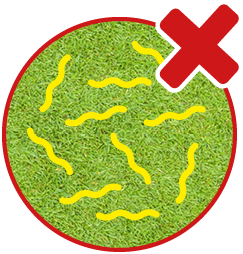
In the 'red zone' where the worm burden is holding lambs back, lambs may end up not finishing and being sold as store lambs.

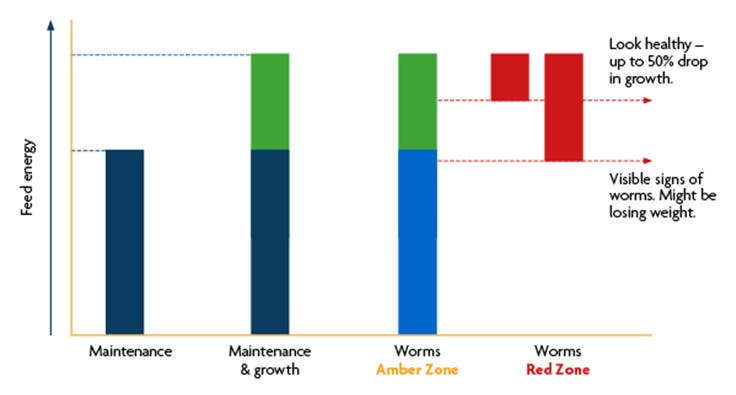
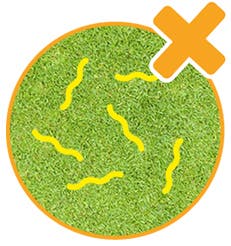
Even with a moderate worm burden, so in the 'amber zone', 50% of the potential growth rate could be lost on the feed that's available. This might mean that all the feed resources are used by the time the lambs are finished.

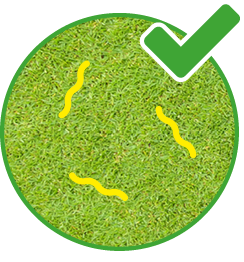
If the worm challenge is managed as well as possible, lambs stay in the 'green zone' and grow to their potential on the feed that's available, using that feed more efficiently and finishing before all the feed is used.
What could YOU do with all the extra grass?

Why worms can hit growth rates so hard
Lambs can only grow when their daily feed intake exceeds the amount they need to maintain their weight, so when worms take even small amounts, there’s less available for growth.
What is good worm control
Before we had broad spectrum wormers, the only way to minimise the damage from worms was to focus on grazing management for clean grazing. Since we've had a selection of very effective wormers, the focus has been on controlling the worm burden inside the sheep, and we have largely ignored the part of the worm life cycle that happens on the pasture.
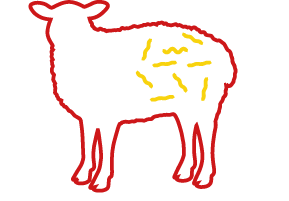
To get the best level of worm control and therefore our best growth rates on the grass available, we need to do both:
Where does Zolvix fit in?
Every flock, every year preferably before there's a visible problem with the older wormers.
Wormers are an essential part of managing the production-limiting impact of worms, but wormers should be used when there is a demonstrated need rather than as routine treatment programme.
During the bulk of the grazing season, when there is a need to treat, one of the older three groups of actives should be used. On many farms, we can expect these to be less than fully effective in some circumstances so whenever a worming treatment has been given, it's good practice to check its efficacy with a FEC test. The three older groups are:
- the group 1 white drenches (containing for example ricobendazole or oxfendazole);
- the group 2 yellow drenches (containing levamisole) and
- the group 3 clear drenches (containing macrocyclic lactones such as ivermectin, doramectin or moxidectin).
As one of the newer wormer groups, Zolvix, the orange group 4-AD wormer, should be used in every flock, every year for two specific purposes:
- Quarantine treatment for all incoming and returning stock: following the right protocol as is important as using the right product.
- A mid to late season dose for all lambs present at that time (finishing, replacements and stores) in the latter part of your farm's grazing season when a worming treatment is needed - the Break Dose.
Find out more about managing worms in sheep
- Sutherland et al. The production costs of anthelmintic resistance in sheep managed within a monthly preventative drench program. AgResearch Ltd, The Hopkin Institute and Novartis Animal Health
- Coop et al. 1982 J Agric Sci 98, 247-255
- E.Gascoigne & F. Lovatt. In Practice, 2015 37: 401-414