

A good worm control plan helps your lambs thrive1
Don't let your hard work slip through the crack.
When do worms become a problem?
Worms only become a problem when there are enough of them to affect the animal's productivity and health. Even the best stock people can't see when worms start to become a problem. If you wait until you see any signs, even the smallest signs like a starey coat or just not doing as well , the lambs' growth rates will have been slowed down.
Any resistant worms left behind when you do treat, make this even worse.
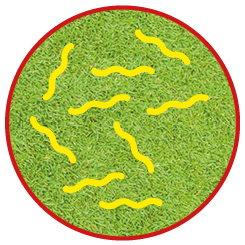 Red Zone
High pasture larvae:
HIGH RISK

High worm burden
Visible signs. May be scouring and losing weight.
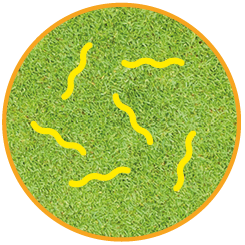 Amber Zone
Medium pasture larvae:
MEDIUM RISK
Medium worm burden
No visible signs. Growth may be impacted.

Worms can cause a 50% reduction in growth rates before clinical signs are seen2.
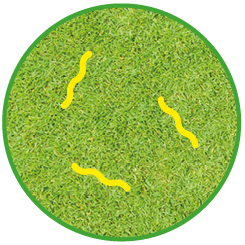 Green Zone
Low pasture larvae:
LOW RISK
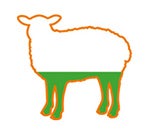
Low worm burden

What is good worm control
Before we had broad spectrum wormers, the only way to minimise the damage from worms was to focus on grazing management for clean grazing. Since we've had a selection of very effective wormers, the focus has been on controlling the worm burden inside the sheep, and we have largely ignored the part of the worm life cycle that happens on the pasture.
To get the best level of worm control and therefore our best growth rates on the grass available, we need to do both:

Where does Zolvix fit in?
As one of the newer wormer groups, Zolvix, the orange group 4-AD wormer, should be used in every flock, every year for two specific purposes:
For all incoming and returning stock: following the right protocol is as important as using the right product.
Use after weaning when a worming treatment is required.
Hear what farmers say about Zolvix
Neil, lowland sheep farmer
Gregor, lowland sheep farmer
Caryl Hughes, upland hill farmer
Find out more about managing worms in sheep
- Sutherland et al. The production costs of anthelmintic resistance in sheep managed within a monthly preventative drench program. AgResearch Ltd, The Hopkin Institute and Novartis Animal Health
- Coop et al. 1982 J Agric Sci 98, 247-255